How different generations understand 9/11
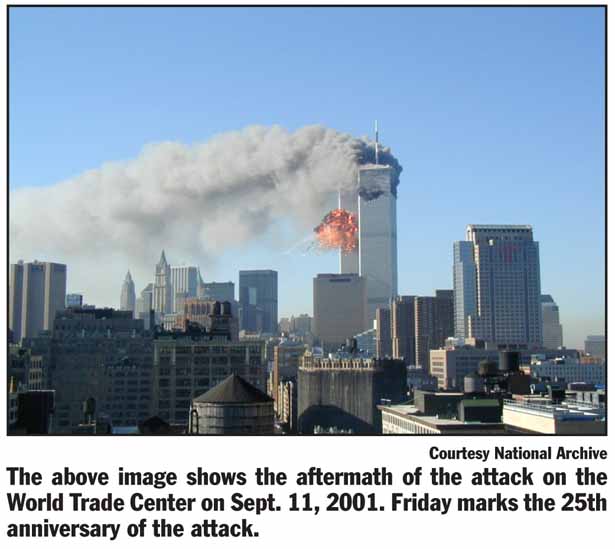
As the nation marks 25 years since 9/11, America’s relationship with that day is undergoing a  generational shift. For millions, 9/11 remains a deeply personal experience. But for a growing generation born after the attacks or too young to remember them, it is increasingly a historical event learned through classrooms, historical records and the memories of others.
From lived memory to history
“There’s always going to be a distinction between people who have a personal memory of what happened on that day versus people where it’s very much a historical event now,” said Jonathan Hepworth, a lecturer in Clemson University’s Department of History and Geography who studies historical memory.
Hepworth sees that transition firsthand in his classroom. Twenty-five years after the attacks, he said he now has almost no students who were alive on September 11, 2001. Yet some identify 9/11 as the historical event that interests them most, in part because they know people who remember it vividly.
How memory changes over time
For those who lived through 9/11, memories of that day can remain powerful while also changing over time.
“Memory is a really tricky thing,” Hepworth said. “The fact is that memory isn’t passive and remembering something is always an active process.” Memories can become connected with later experiences, Hepworth explained, shaping how people understand and recall major events years after they occur.
That helps explain why so many people can still recall exactly where they were when they learned about the attacks.
“Those memories got connected with that big major event,” Hepworth said. “Because those memories were forged together, it’s really sort of hard to break them because they now have an inseparable bond.”
Understanding the world of 2001
Understanding 9/11 as a historical event also means recognizing how different the world was in 2001. Social media and many of the digital platforms people now rely on to experience and interpret breaking news did not exist.
“Now that we’re 25 years from it, it’s often easy to forget that life on September 12th, 2001, was far more similar to the way things were in 1996 than it is today,” Hepworth said. This historical context is especially important for younger generations trying to understand an event they did not personally experience.
About the expert
Jonathan Hepworth, Ph.D., is a lecturer in Clemson University’s Department of History and Geography. His research focuses on U.S. history, particularly the late 19th and early 20th centuries, as well as historiography and memory studies. His work examines how historical memory shapes perceptions of the past and how historical thinking can help people better understand past and present events.